 lochsh
Pandaí or "pandy" for a tin mug or jug
Wed 25 February 2026Childhood memories
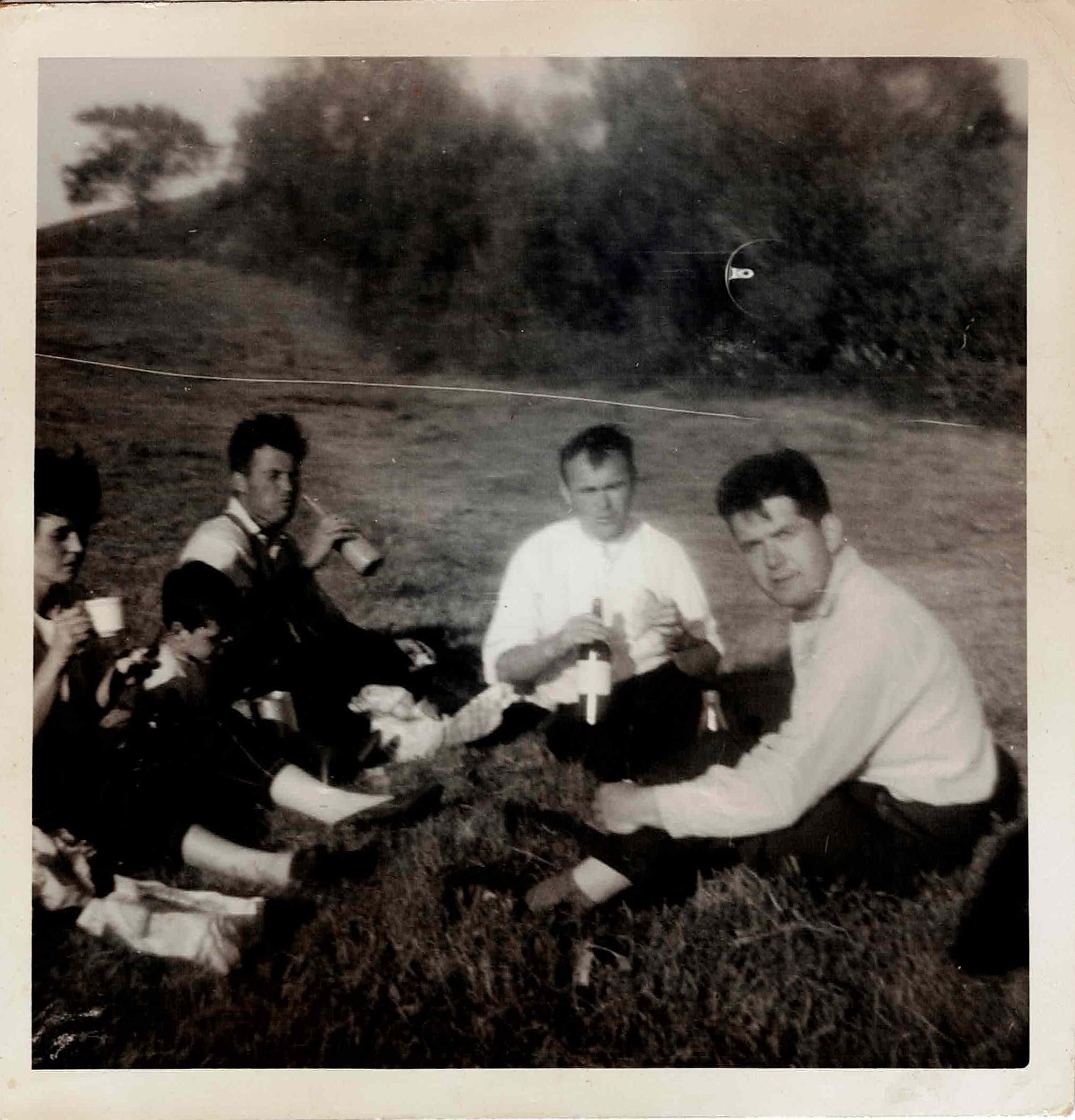
My mother was talking about her childhood summers in rural Donegal, and used the word "pandy" to describe the tin drinking vessels she was often tasked with bringing to the men out working, along with a pail of water from the spring well to fill the vessels from. My culturally hungry ears pricked; could this be a Gaelic word? The initial p- marks it as a loan word — but from which language, and with what meaning?
The word pandaí does not seem to appear in any major Irish dictionaries, but searching the digitised parts of Ireland's National Folklore Collection yields a few usages in Donegal. A selection:
-
From near Creeslough:
- Tháinic sí annsin agus shín sí an pandaí dó agus d'ól se achan braon a bhí
- "She came there and passed the pandy to him, and he drank every drop"
-
From near Kilcar
- Gheibheadh siad baisín céad uair agus cuireadh siad gráinín ann. Go minic chuireadh siad dhorn de min bhuidhe fríd. Chuireadh siad gráinín soda agus gráinín salainn isteach leobhtha annsin. Chuireadh siad pandaí blaithche isteach annsin agus mheasgadh siad na ceithre rudaí le chéile.
- A description of how to make soda bread; pandaí blaithche = "pandy of buttermilk".
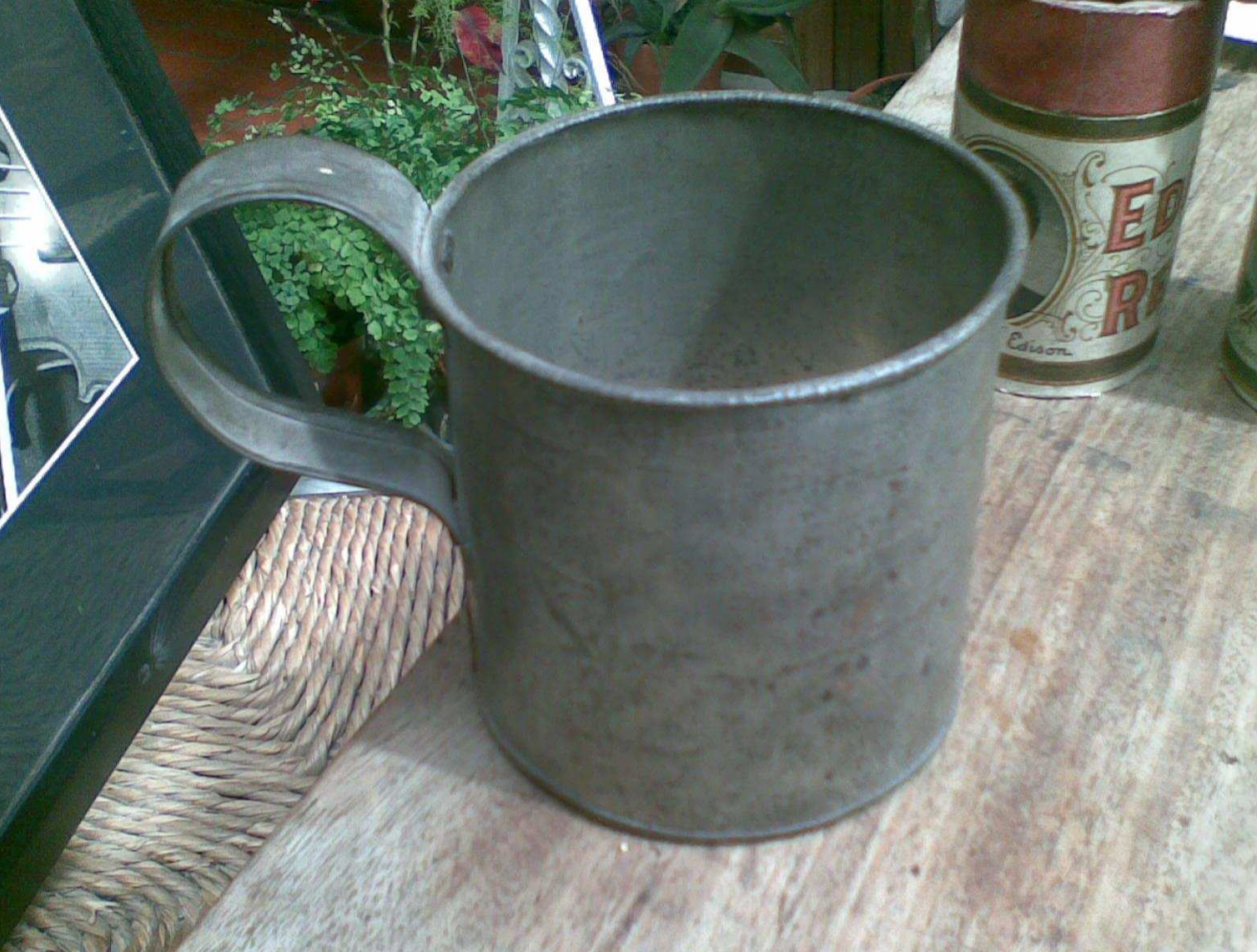
My family only called the small drinking vessels "pandies", with larger tin vessels (as used for getting water from the well or collecting milk from the cows) called pails or buckets. There are examples of "pandy" also being used for these larger vessels:
- near Glendowan
- "When a heifer calves you are to put a palm branch and a penny at the bottom of the pandy when you are milking her for the first time. This saves her from witchcraft."
These corroborating examples are pleasing, but do not get us any closer to understanding the origin of the word. There are a few usages of the word with divergent meanings that perhaps hold the key: in Munster, "pandy" appears to refer to mashed potatoes (see "poundies" in Ulster1), and some sources also use it to refer to receiving a beating. In fact, we find a version of pandaí with slenderised consonants as peaindí2 in Ó Dónaill's dictionary, with meanings "tin mug" and "mashed potatoes (with milk and butter)".
What do tin mugs, mashed potatoes, and physical beatings have in common? The clue is in the Ulster word "poundies" for mashed potato with sybies: all three involve pounding! Tin mugs are hammered into shape, potatoes are pounded into mash, and alas schoolchildren of yore were routinely whacked. It would seem to me that "pound" was borrowed into Irish to make pandaí, where in this instance the suffix -aí makes it "thing that is pounded" or (pleasingly) "poundee" — and then from there it was retained in some Hiberno-Englishes as "pandy".
To demonstrate the pounding: travelling tinsmiths would make things like pandies to sell. You can watch Johnny Doherty make one in the 1972 documentary Fiddler on the Road:
An alternative etymology
I was pleased with my above proposed etymology, but a subsequent discovery has me questioning it.
Collins' English dictionary defines "pandy" as "(in schools) a stroke on the hand with a strap as a punishment", and notes the term is primarily used in Scotland and Ireland3. The etymology is proposed as deriving from the imperative pande manum, Latin for "hold out [your] hand". This seems to have been issued to pupils by teachers, at a time when Latin was still used in schools, as described in James Wilson's Early Recollections of Life at King William's College on The Isle of Man. Both "pandy" and pande manum are used to refer to this punishment in various English language texts4.
So did "pandy" come to Irish via this restricted meaning, and spread in usage to other things that were struck? Or does the word "poundies" suggest that the usage for mashed potatoes at least evolved separately? I do stand by the idea that the tin mugs take their name from being struck during their manufacture, but whether this came from English "pound" or "pandy" (for a school beating), I cannot say.
Usages of pandaí or "pandy"
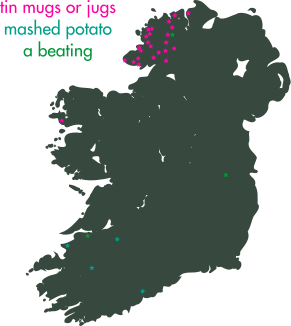
The Munster usage for a beating describes a horse's feet crushing a fox as having "made a pandy of him", which might just be referring to getting mashed like a potato.
Below is a list of usages of pandaí or "pandy" to mean something along the lines of "tin mug". All are from Donegal, except one from Mayo.
-
In Seán Ó hEochaidh's Sean-chainnt Theilinn (1955), pandaí is glossed as "a tin pot", and used in the saying Tá sé go h-oiread an phandaí. If I understand correctly this means "it's as big as a pandy" and is used to describe small tasks, or tasks near their completion.
-
In Pól Ó Seachnasaigh's Eagrán de na scéalta idirnáisiúnta ó na Cruacha Gorma a bhailigh Seán Ó hEochaidh do Choimisiún Béaloideasa Éireann i 1947 agus 1948 (2012), stories collected from the Bluestacks by Seán Ó hEochaidh are reproduced. Story 26:
Dúirt an seanduine leis an bhean ar ais go gcaithfeadh sí éirí, agus an bhó a bhleán, bhí bó ann i ndiaidh breith, agus pandaí den bhainne a thabhairt dó, nó nach gcuirfeadh sé isteach an oíche.
"The old man said to the woman again she must get up, and milk the cow, the cow was after giving birth, and bring a pandy of milk, or he wouldn't pass the night." -
In a song collected in the Bluestacks, published in Béaloideas, Iml. 68 (2000)
-
In Gerard Stockman's The Irish of Achill, Co. Mayo (1974), pandaí is glossed as "an aluminium mug"
-
In Pádraig Ó Baoighill's writing, including in Srathóg Feamnaí agus Scéalta Eile (2001): Ó bhreacadh na maidne bhí fear an oileáin ina shuí agus pandaí de tae dhubh déanta aige. "[...] and he made a pandy of black tea."
-
In Conor Thomas Caldwell's 'Did you hear about the poor old travelling fiddler?' – The Life and Music of John Doherty (2013)
-
In this inscription in Edenfinfreagh, telling the story of John Doherty's brother Mickey escaping violence from Black and Tans by making a pandaí on the spot to demonstrate he was just a poor tinsmith.
-
Diarmuid Ó hAirt's Cnuasach Conallach: A Computerized Dictionary of Donegal Irish defines it as Soitheach stáin ("tin vessel"), and uses sources collected from The Frosses, Lettermacaward, and Glencolmcille.
-
In a song collected in Patrick MacGill's Songs of Donegal (1921). Page 19: "In all things handy/Thatching a haystack or mending a pandy"
-
In Seaghán 'ac Meanman's works, including in Mám Eile as an Mhála Chéadna (1954): Níorbh' fhada go dtáinig an chomharsanach a ba deirean-naighe a bhí astigh an oidhche roimh ré, agus bhí pandaí bainne leis. "[...] and he had a pandy of milk with him."
-
In Joy Elliott's Derby to Donegal – by design (2011): "Inside I was invited to a ‘pandy’ of tea. A pandy was a tin mug, usually blackened from being nudged into the fire, so tea ended up being stewed this way."
-
In Brighid "Biddy" McLaughlin's Tales of a Patchwork Life (2024): "a tin pandy made by Irish travellers that my son Johnny still drinks from"
Other usages can be found by searching duchas.ie. The National Corpus of Irish also records "pandy" in a couple audio interviews that I haven't listed above.
The panda in the room
I should mention that "panda", for the animals, has been borrowed into Irish and the plural is pandaí. This is of course unrelated etymologically! 🐼
-
Personally I've only ever called it "champ". I've seen "poundies" in Peadar O'Donnell's writing. Possibly it is used outside Ulster too, and it might not always refer to mashed potatoes and sybies. ↩
-
I haven't found any clear record of anyone using this form for tin mugs. There are a couple usages of it in The National Corpus of Irish but I'm not sure what they're referring to. The first one is a food, I don't know about the second. ↩
-
Thankfully corporal punishment was a thing of the past when I went to school, but my parents both received the belt as punishment. They had no recollection of the term "pandy" ever being used in relation to it. It is recorded in the DASG fieldwork in Inverness. ↩
-
A non-exhaustive list of usages referring to hitting the hands with a strap or cane:
- 1715, Scotland, pande manum: Sermon preached by Mr. James Rows (sic), in St. Geil's Kirk at Edinburgh
- 1833, Scotland, pandies: John Kennedy's Geordie Chalmers; or, the Law in Glenbuckie
- 1863, England, pandied: Charles Kingsley's The Water-Babies
- 1917, Ireland, pandies: James Joyce's A Portrait of the Artist as a Young Man